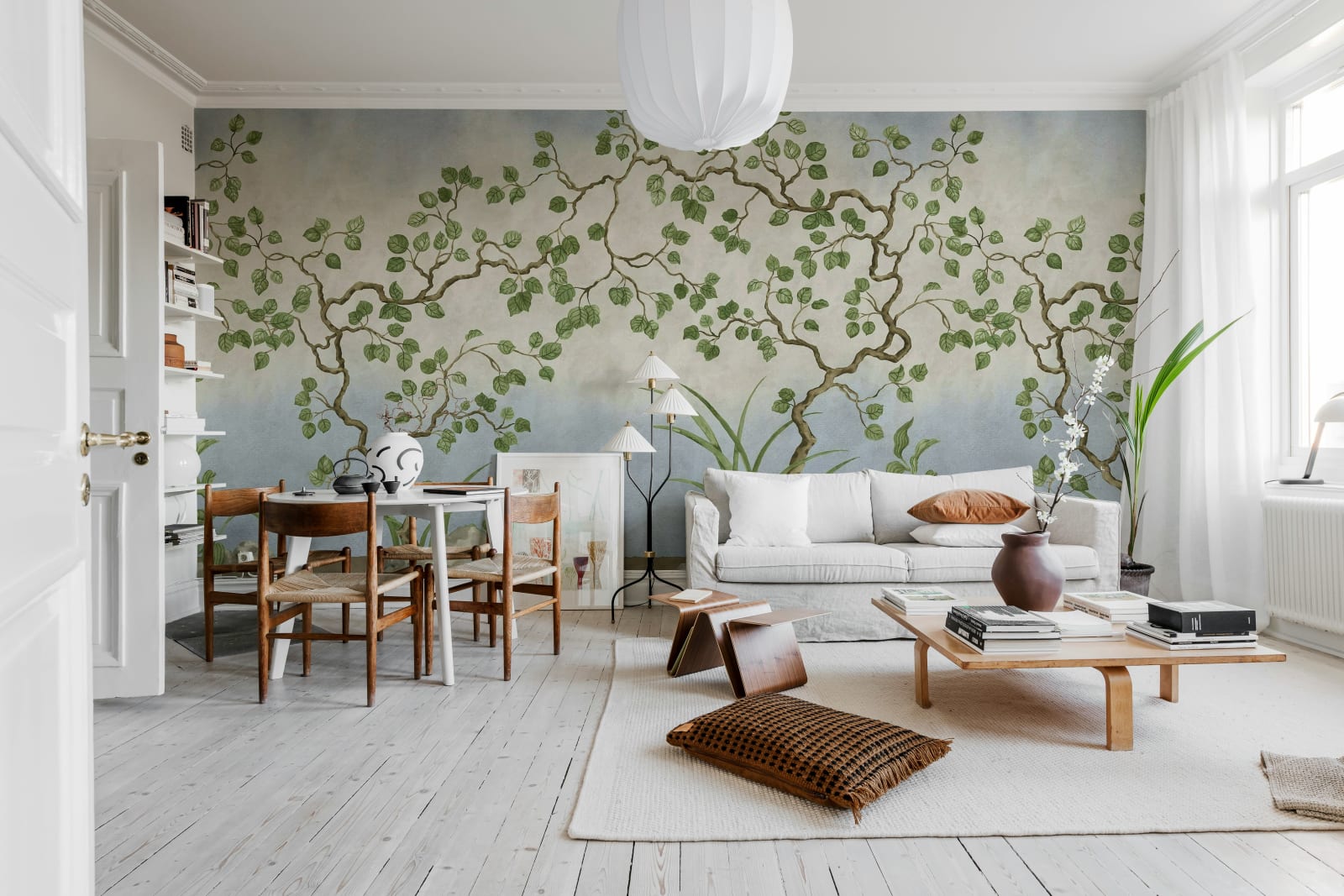
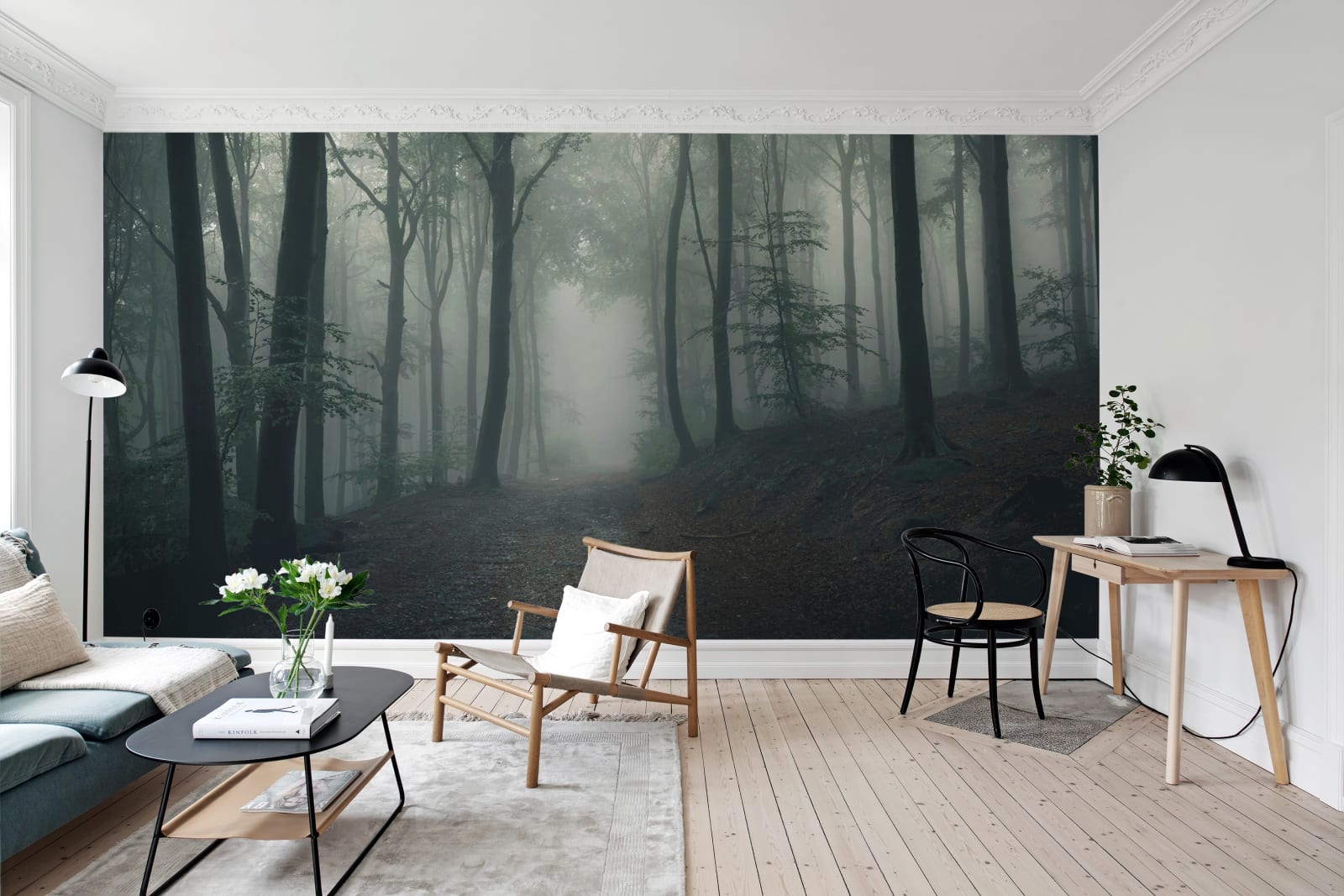
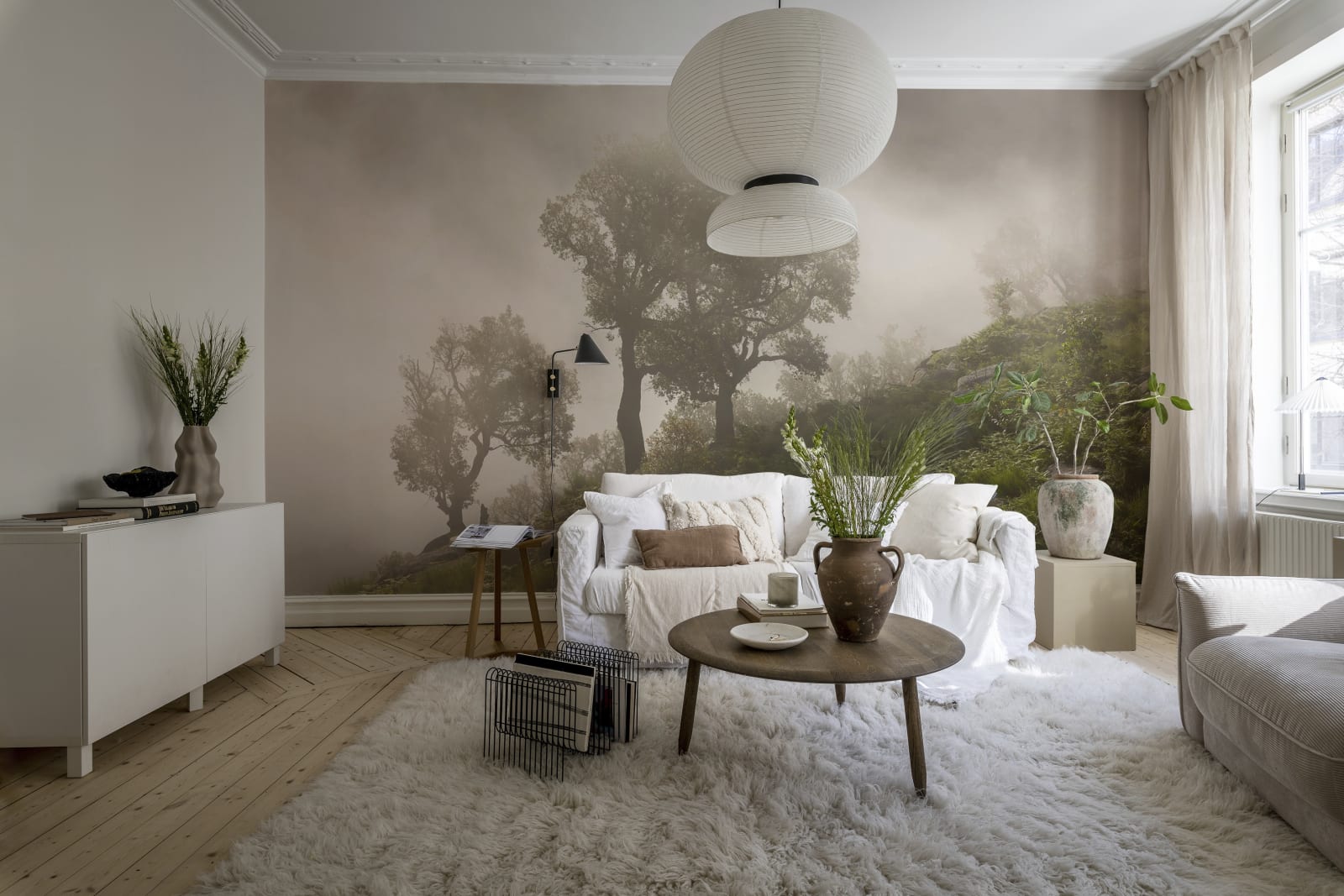
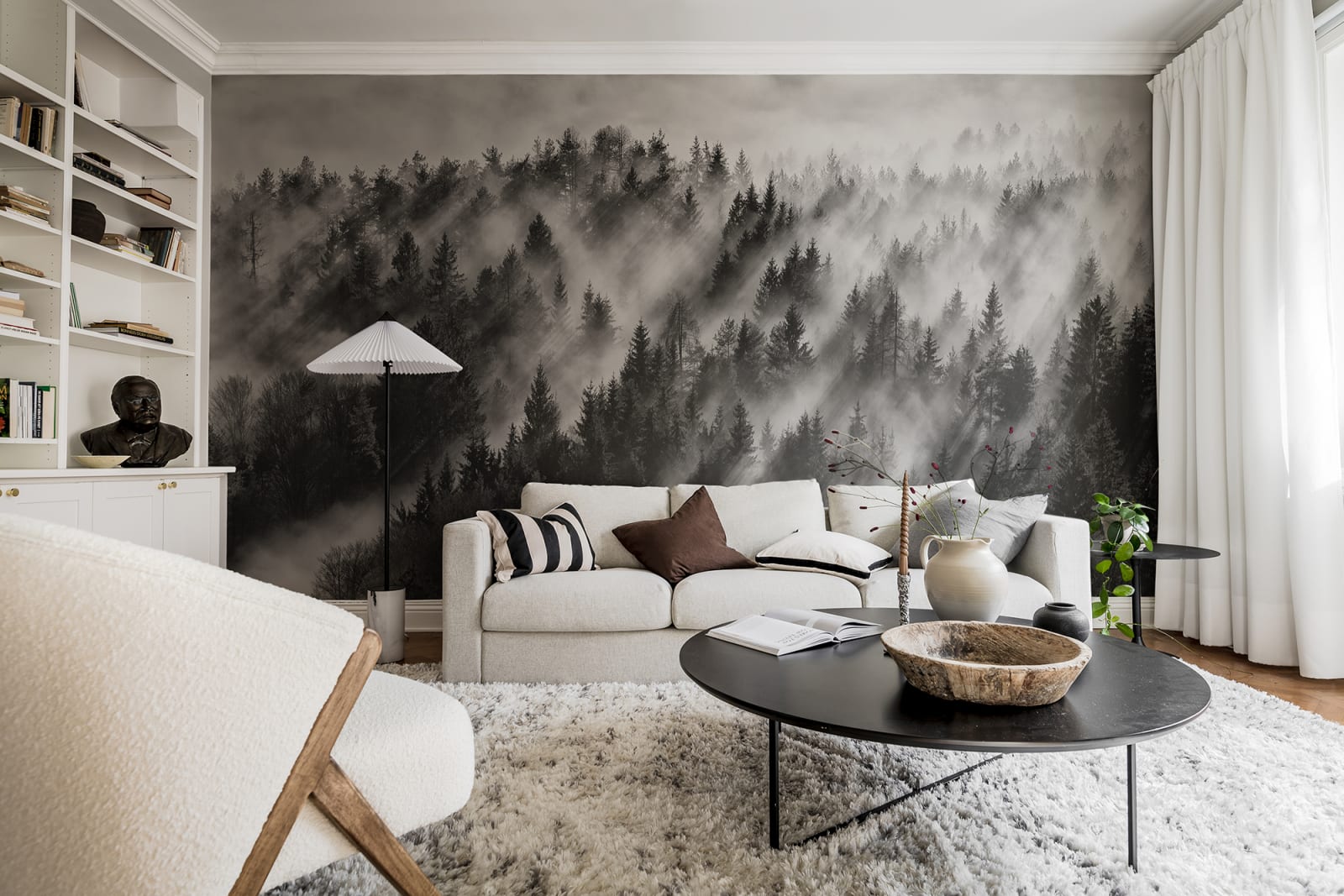
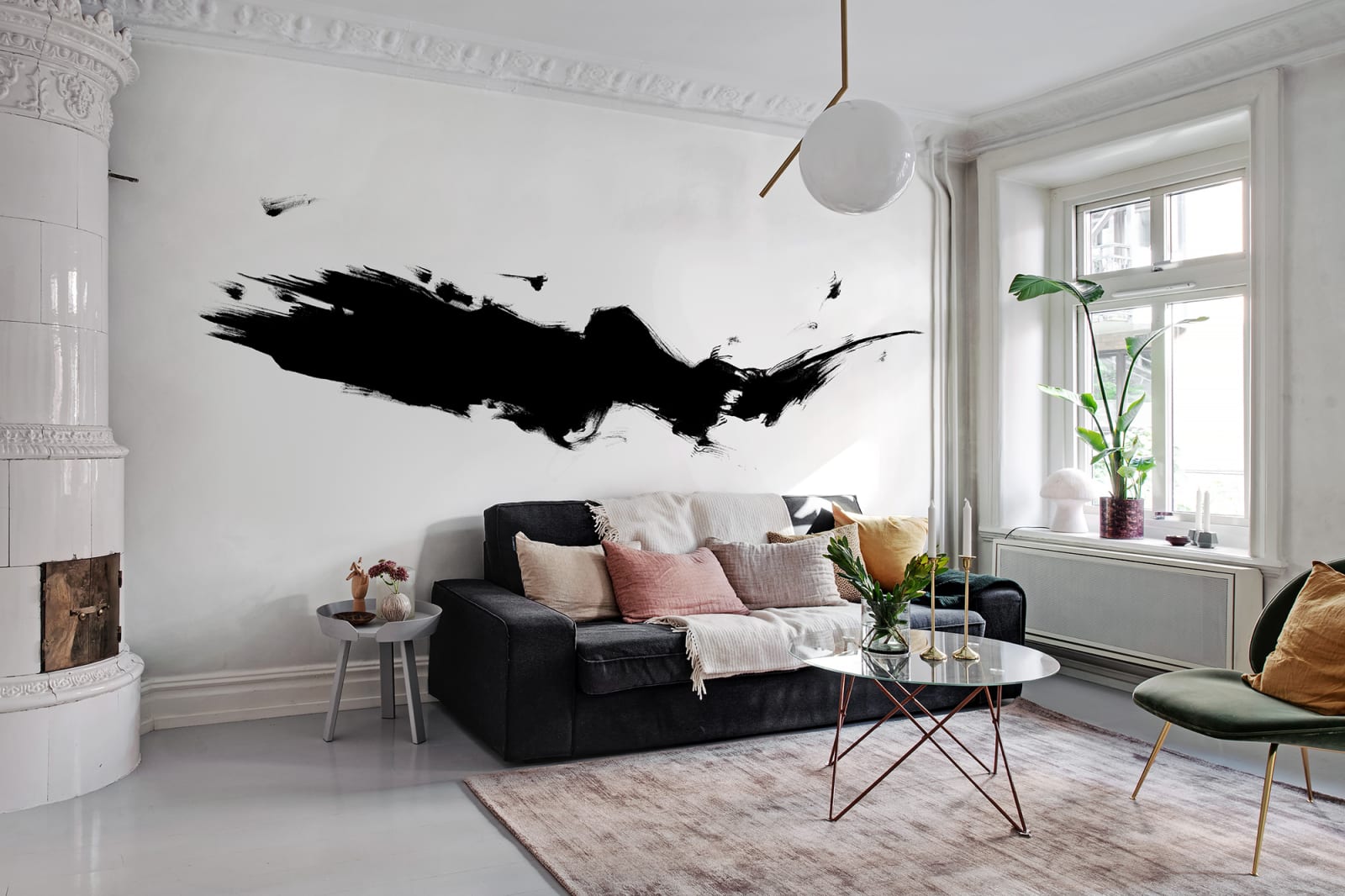
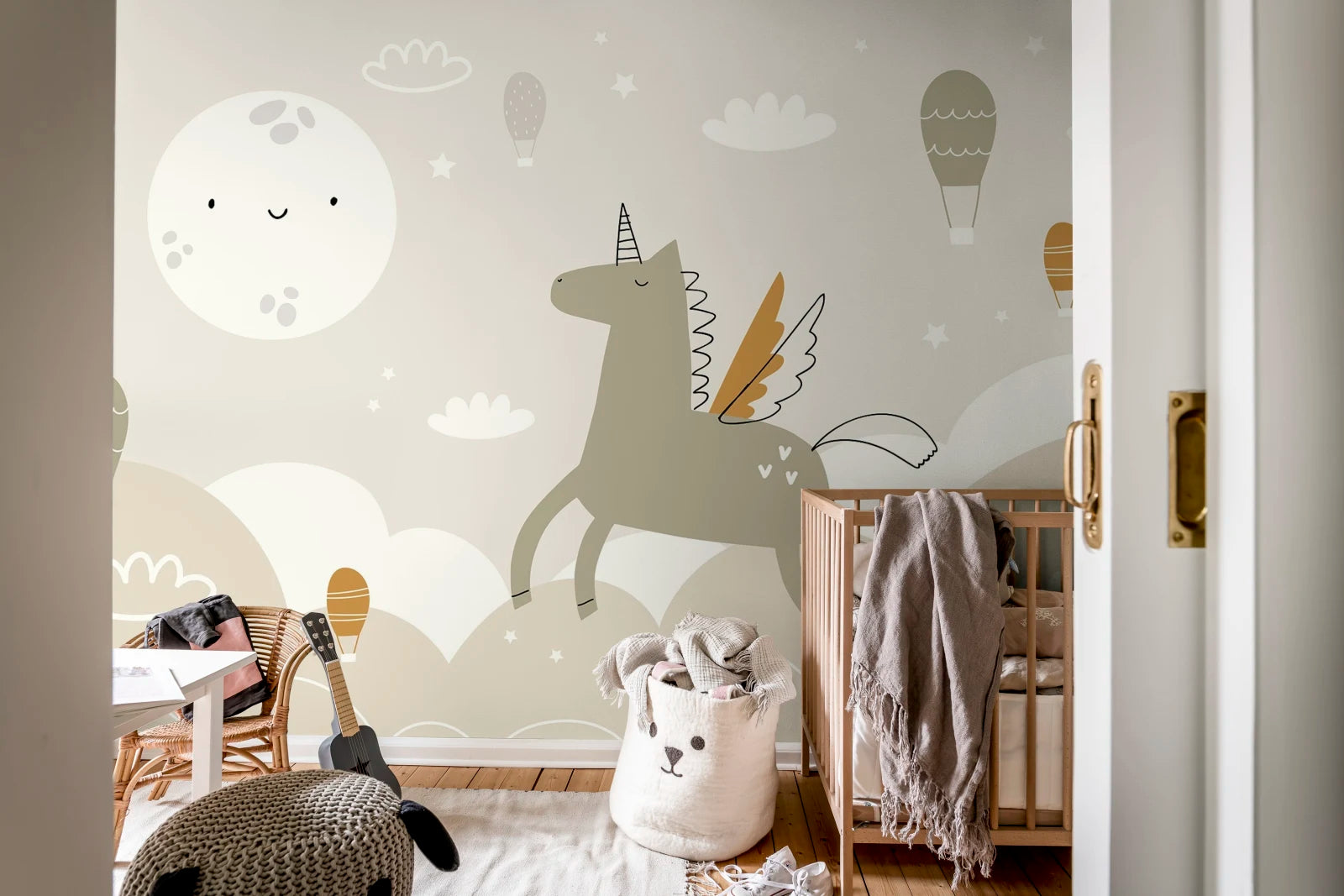
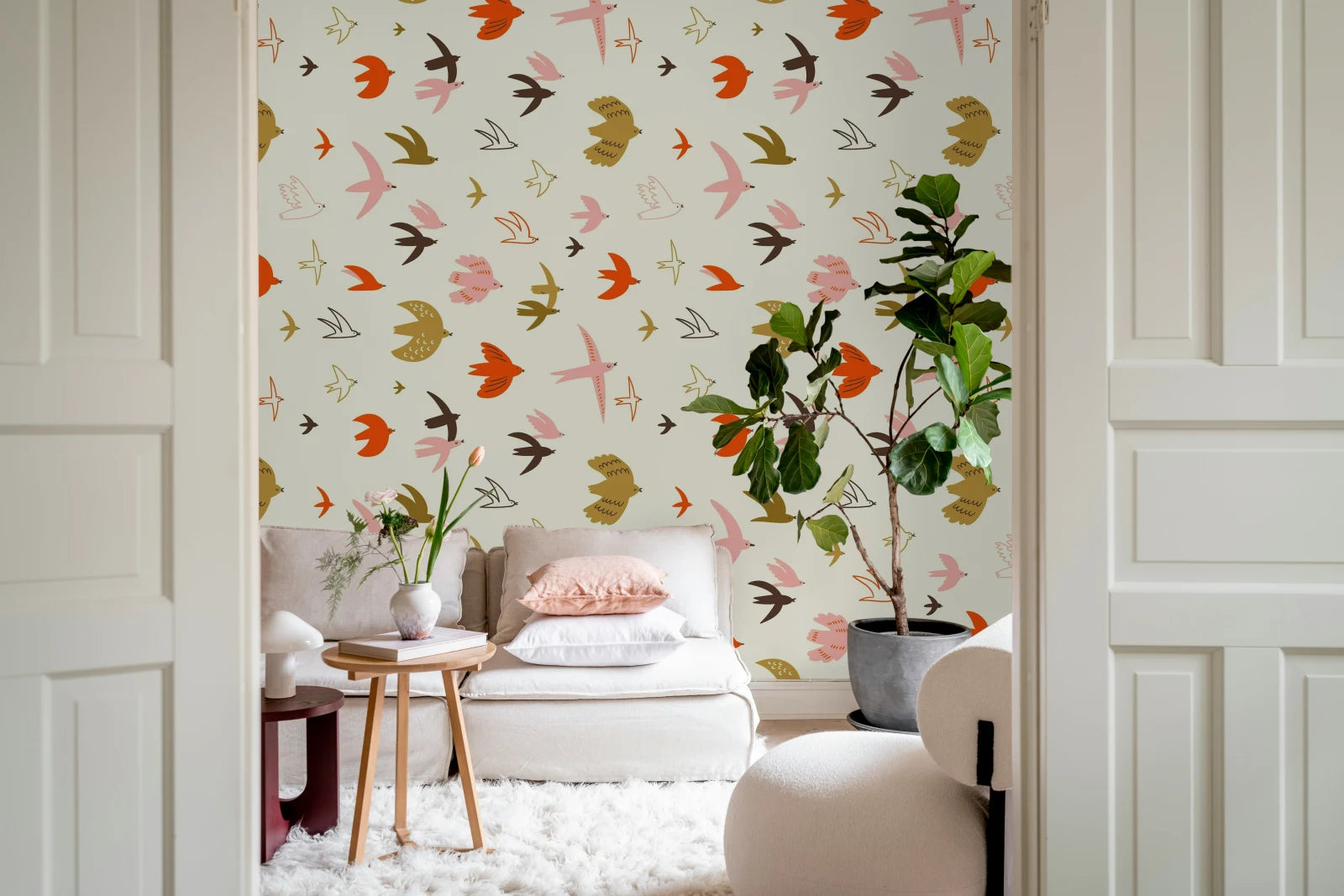
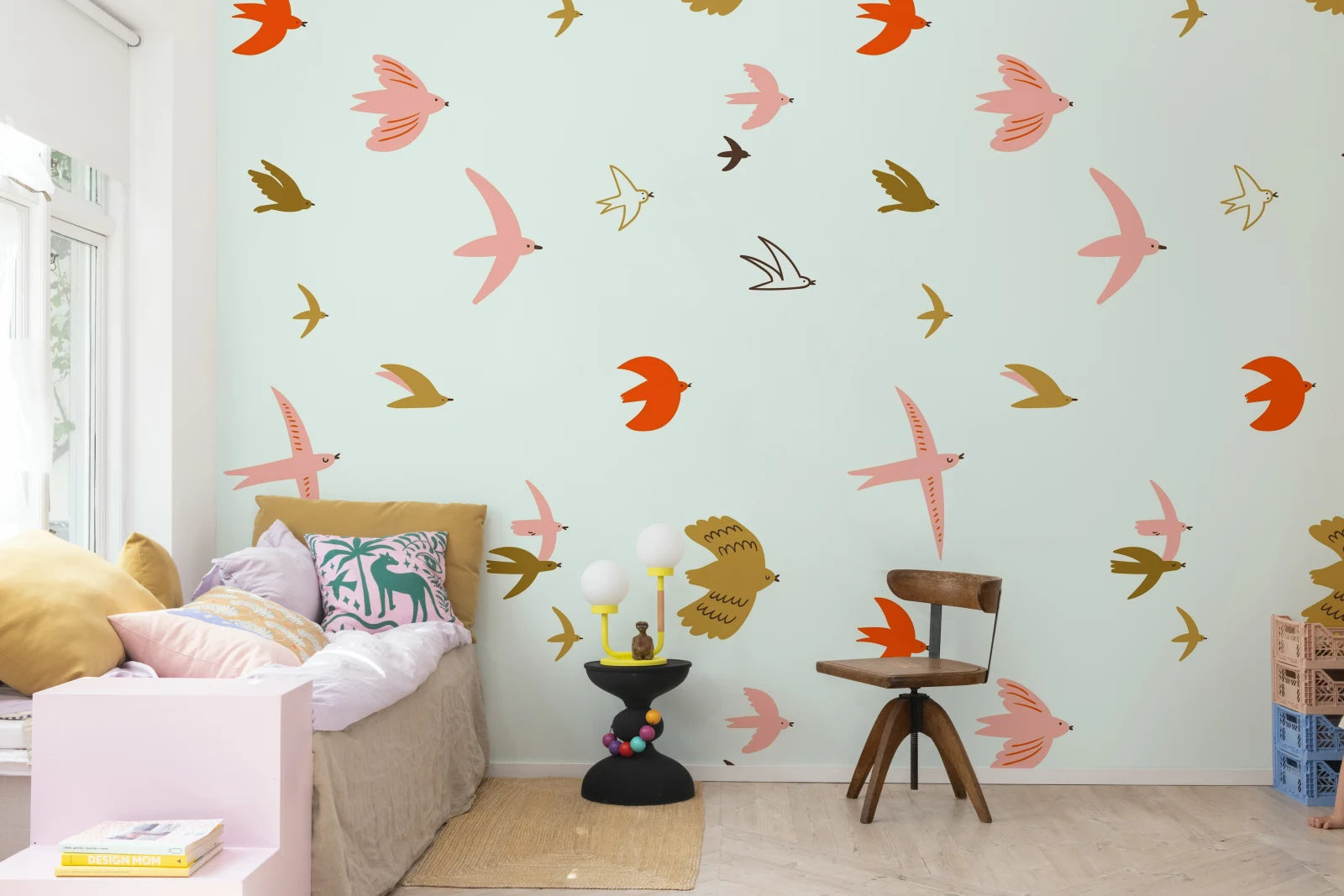
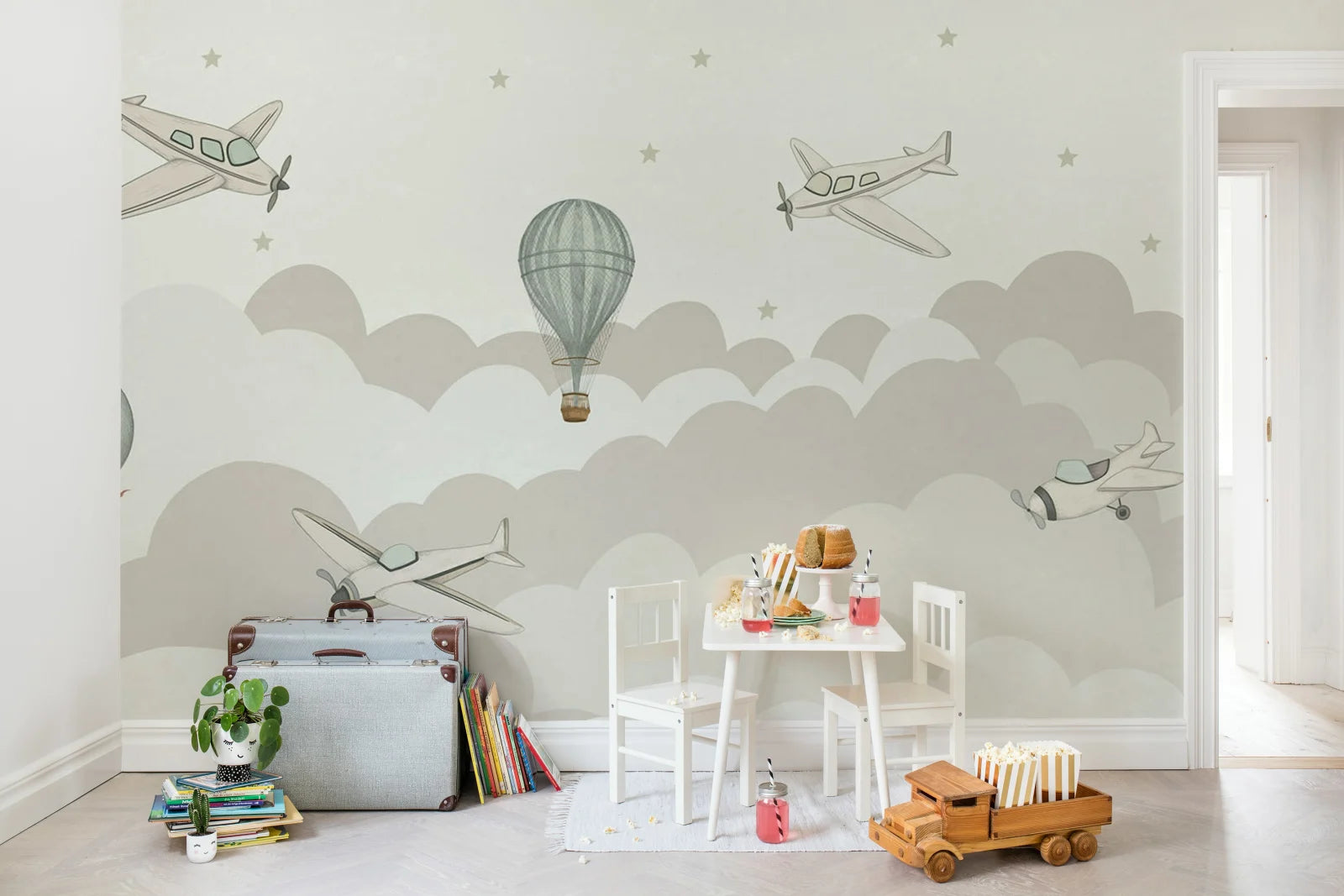
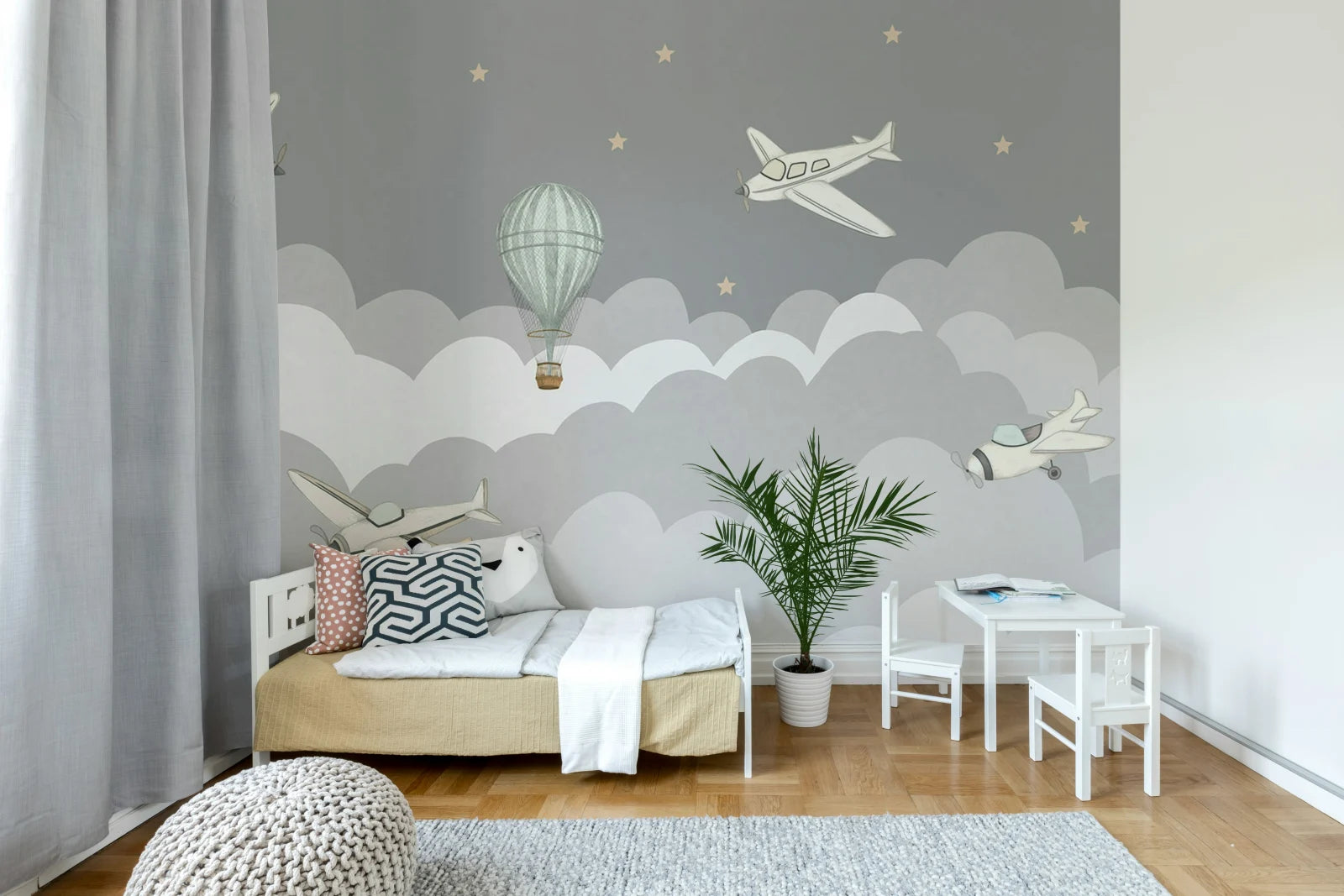
A mural turns a blank wall into the reason people stop talking when they walk into the room. Scenic and panoramic papers carry a scene across the whole plane, so scale and placement matter more than any single swatch.
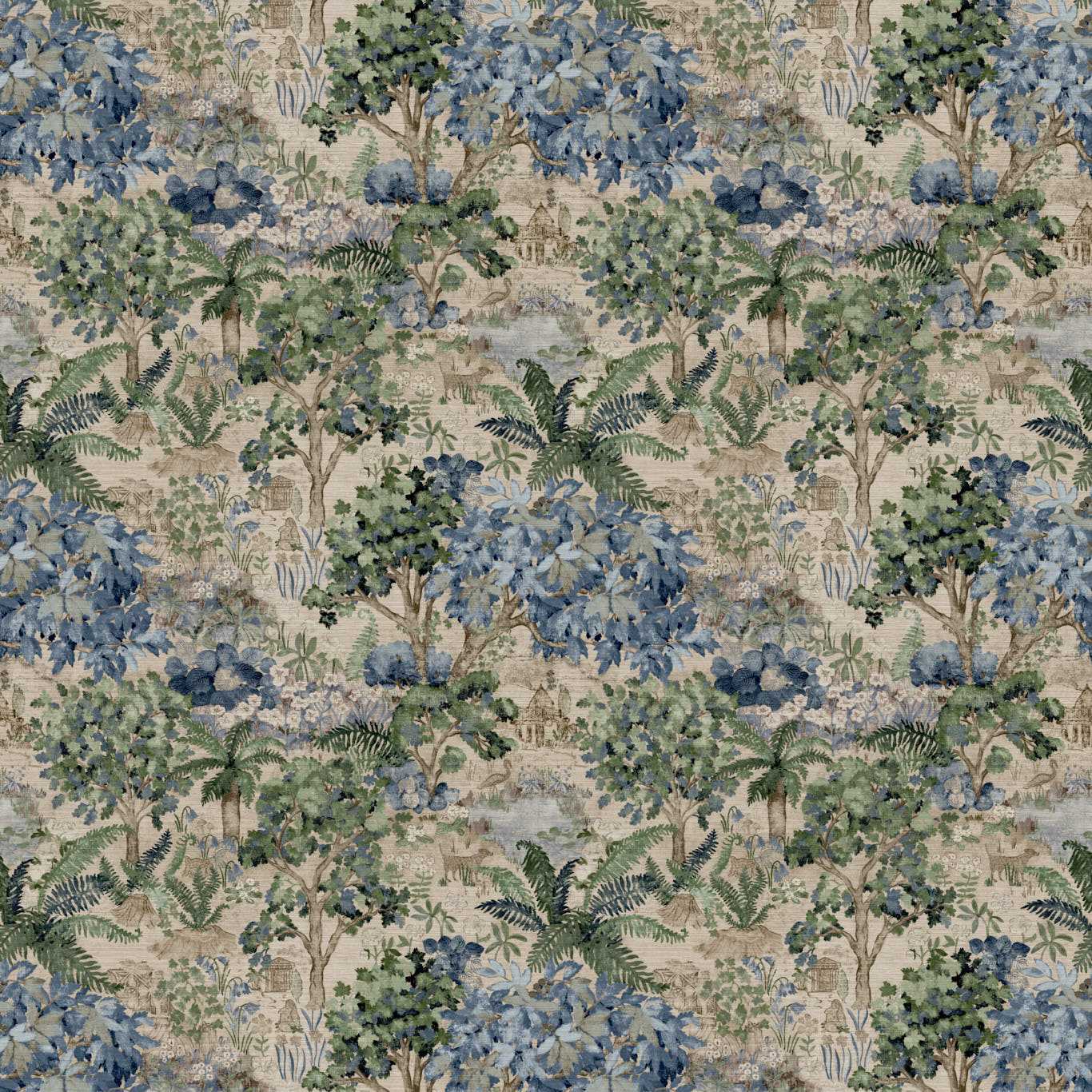
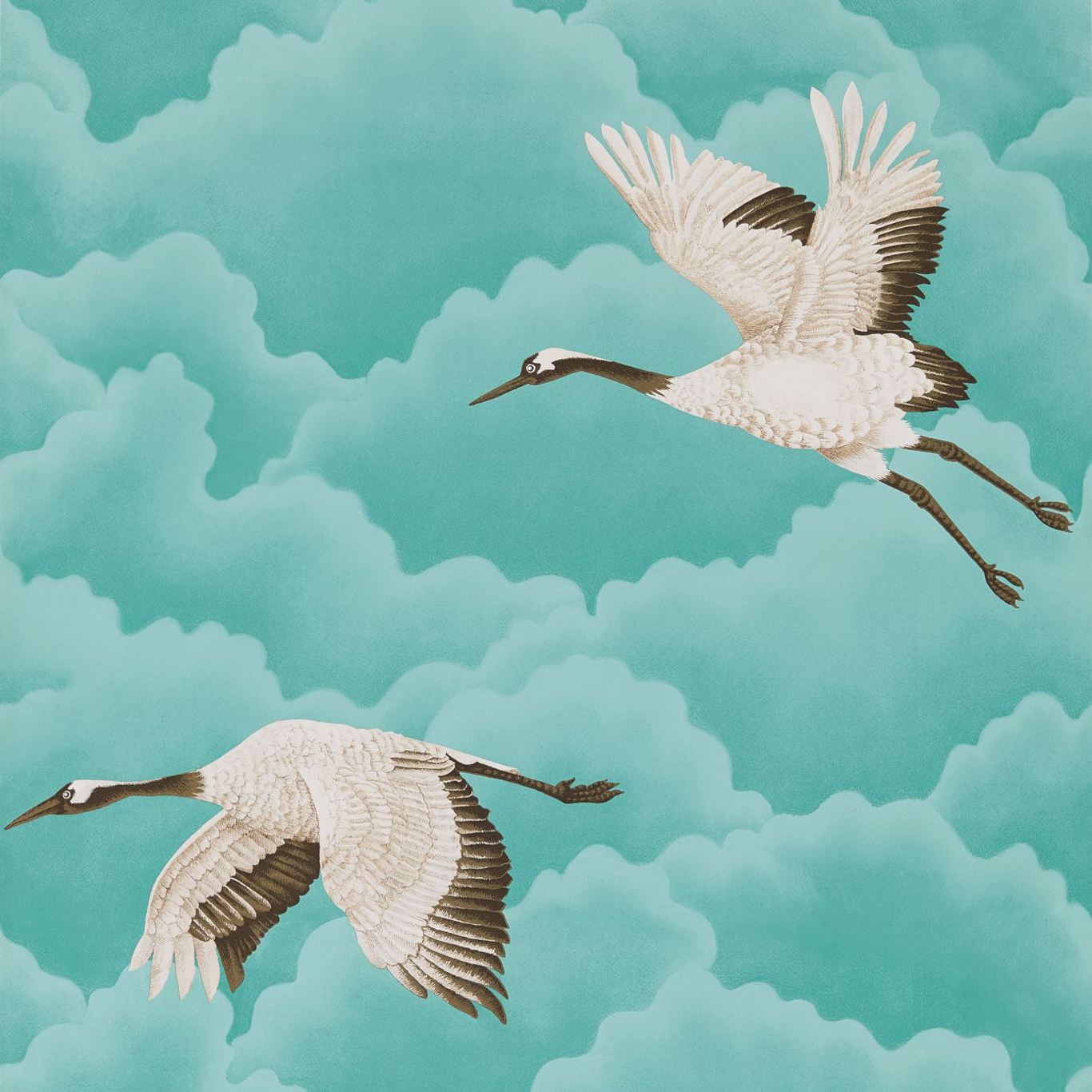
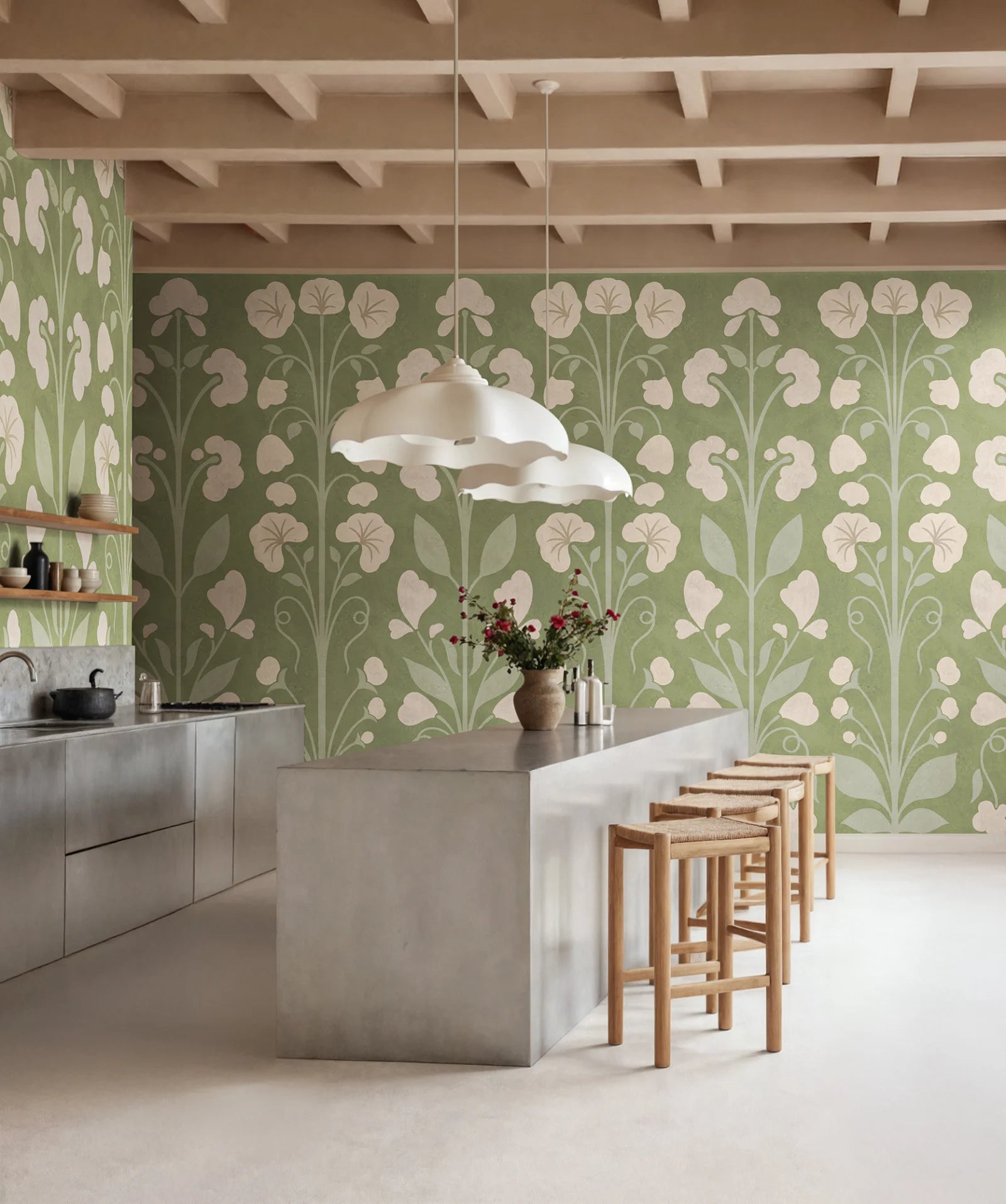
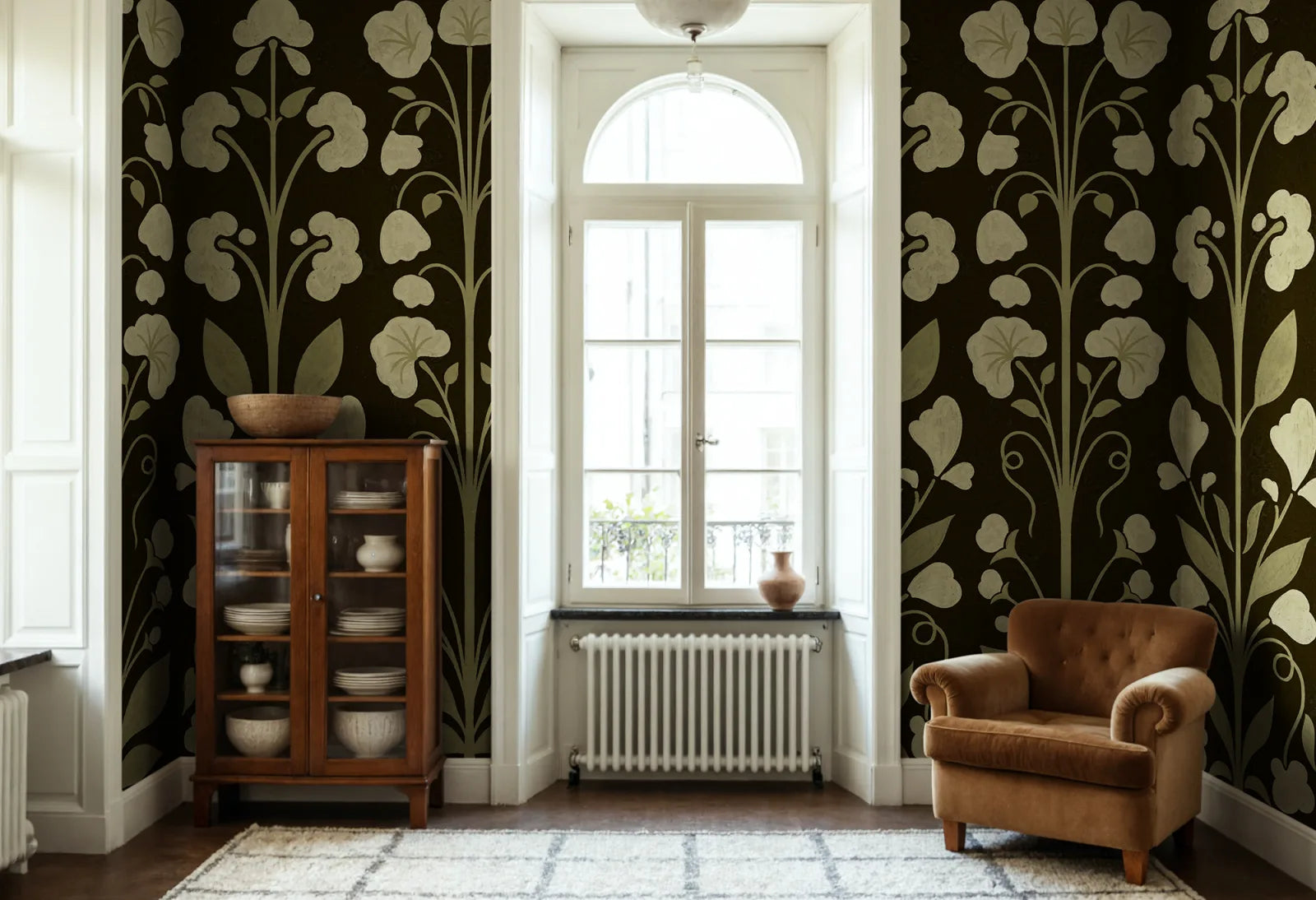
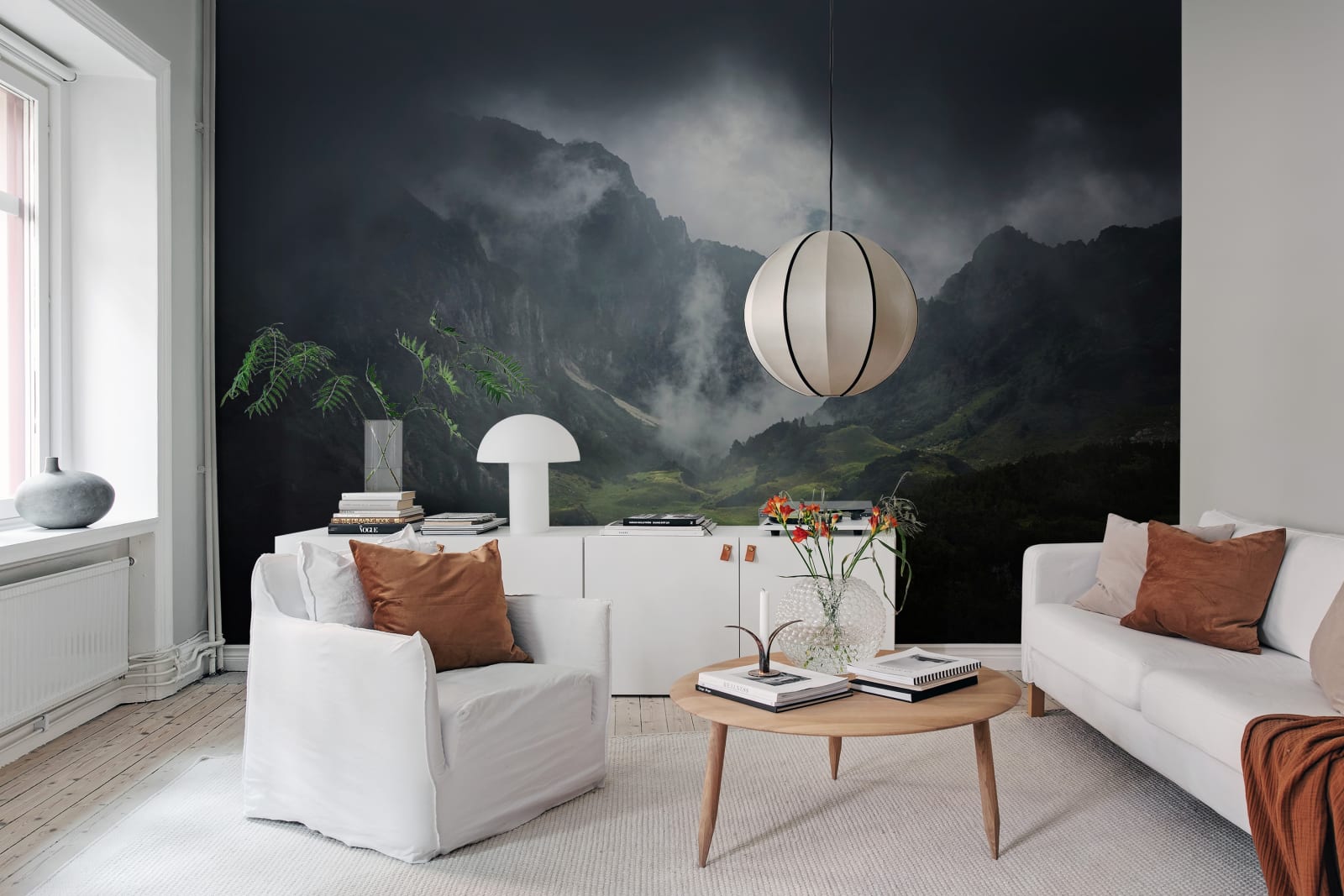
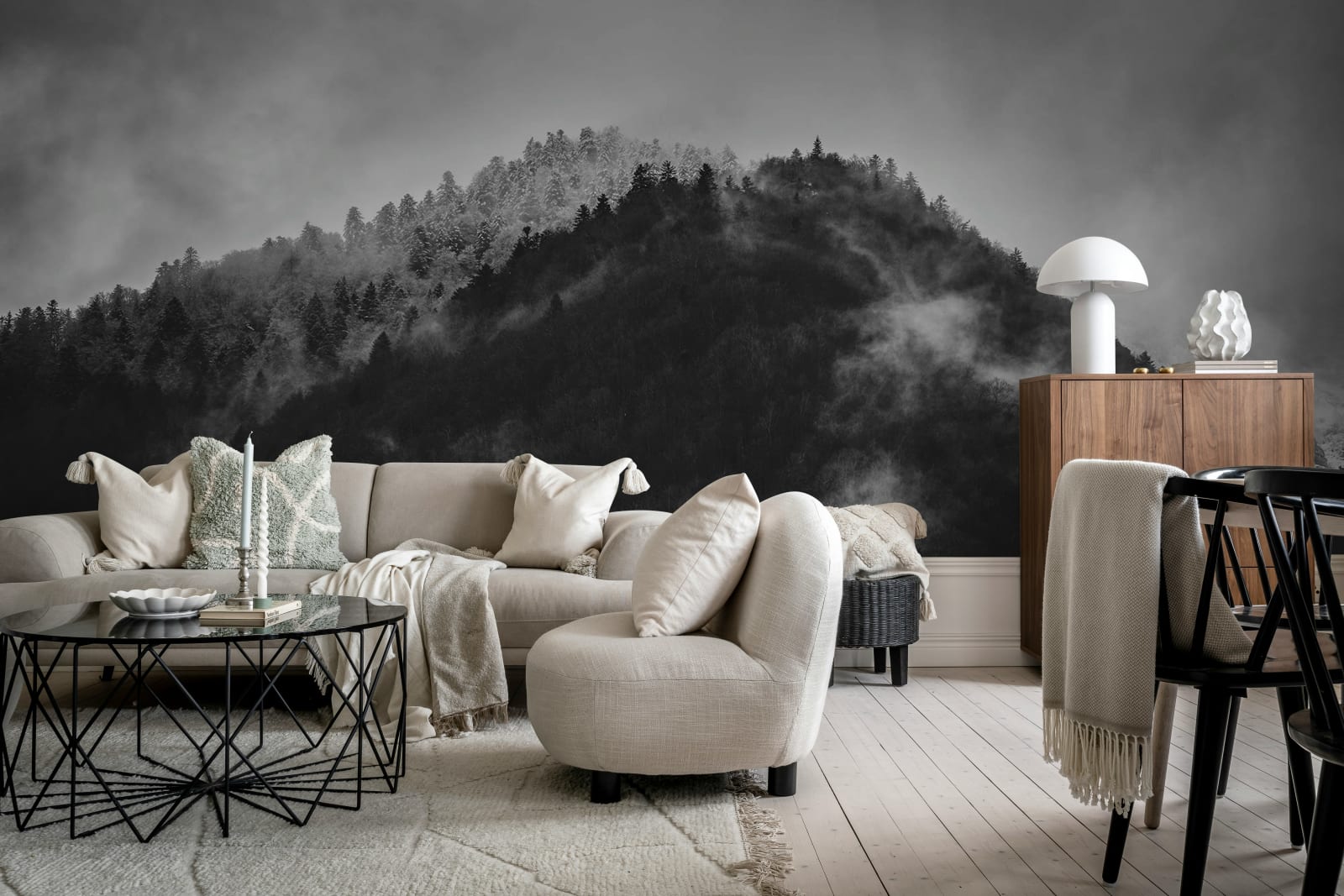
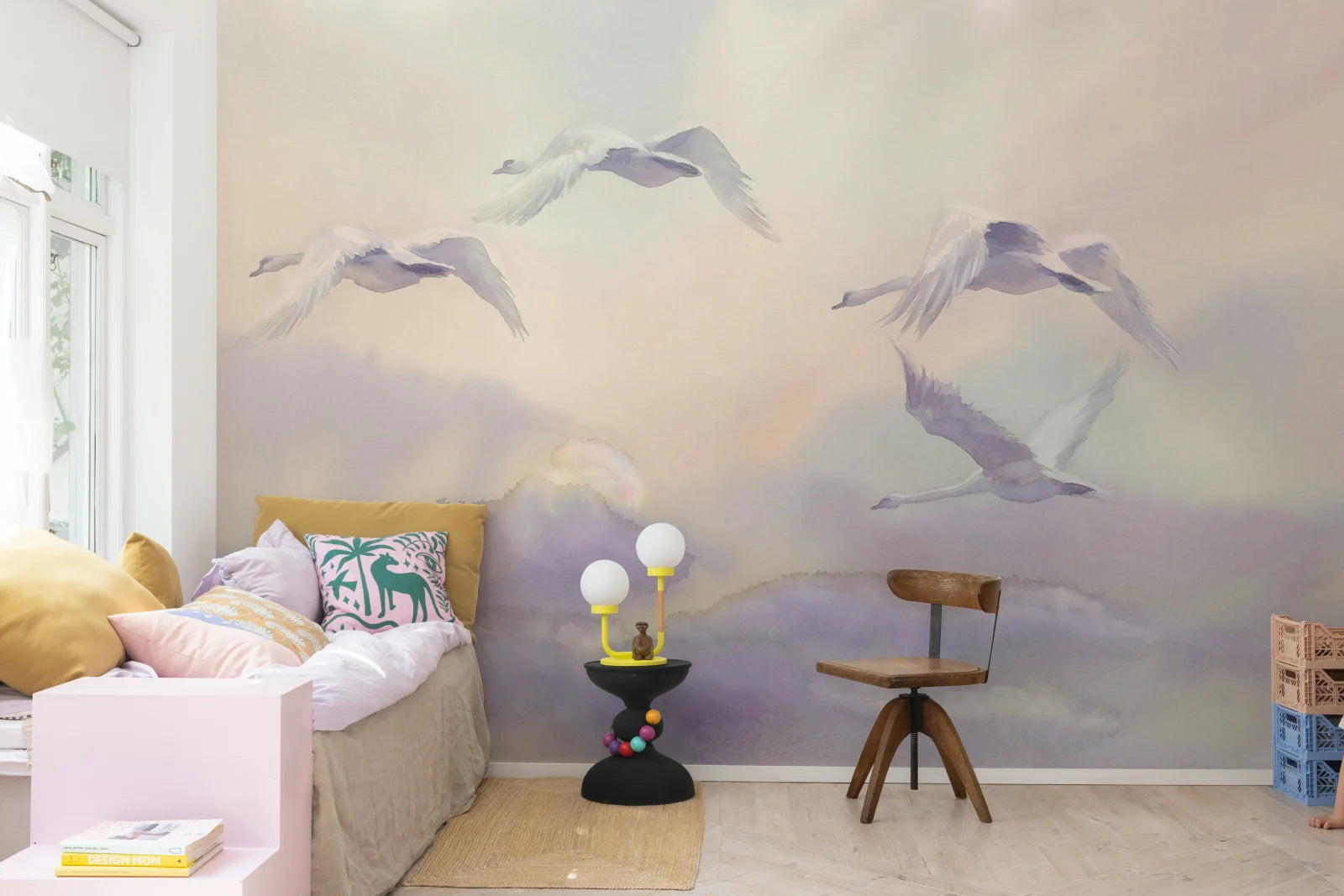
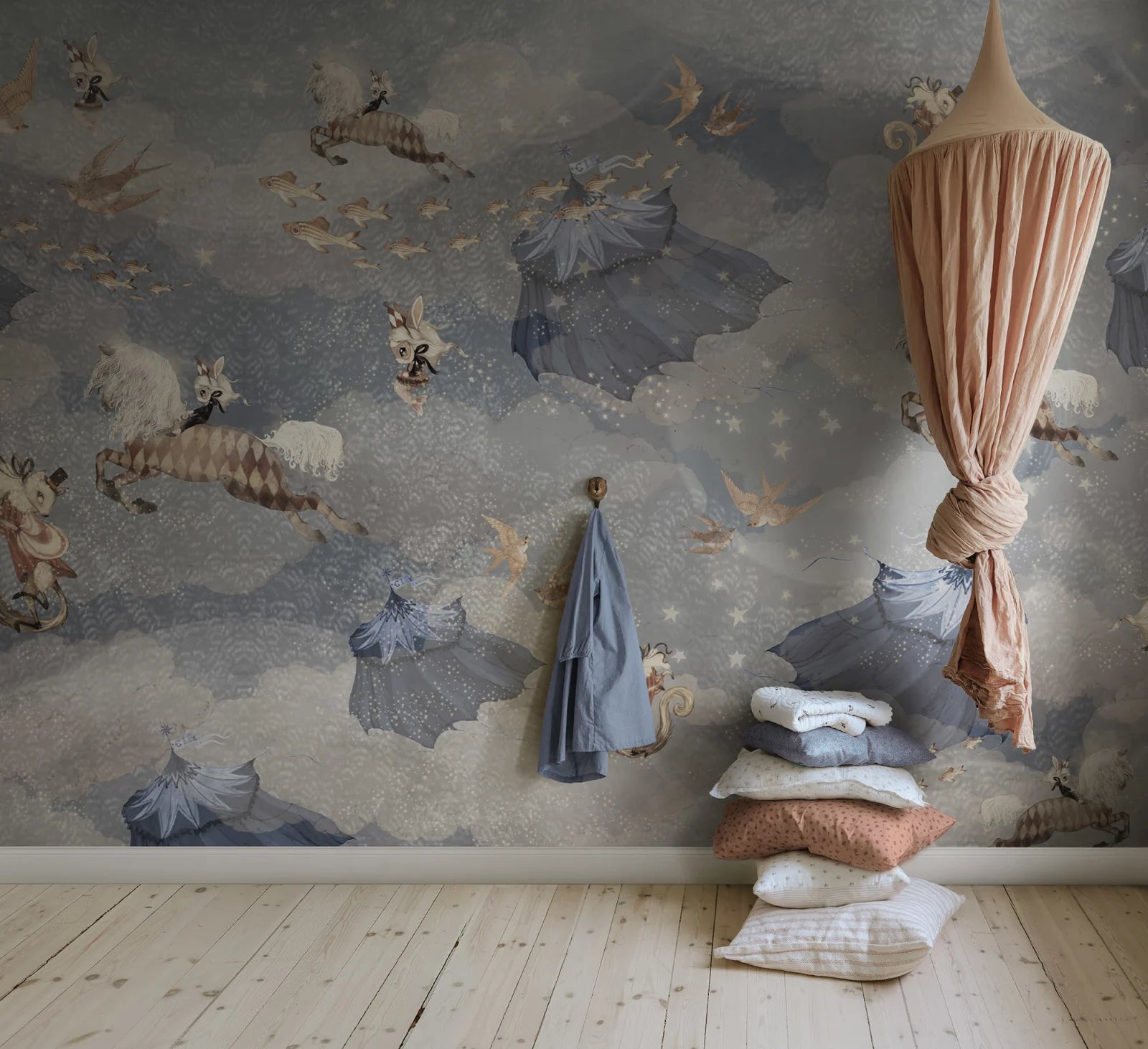
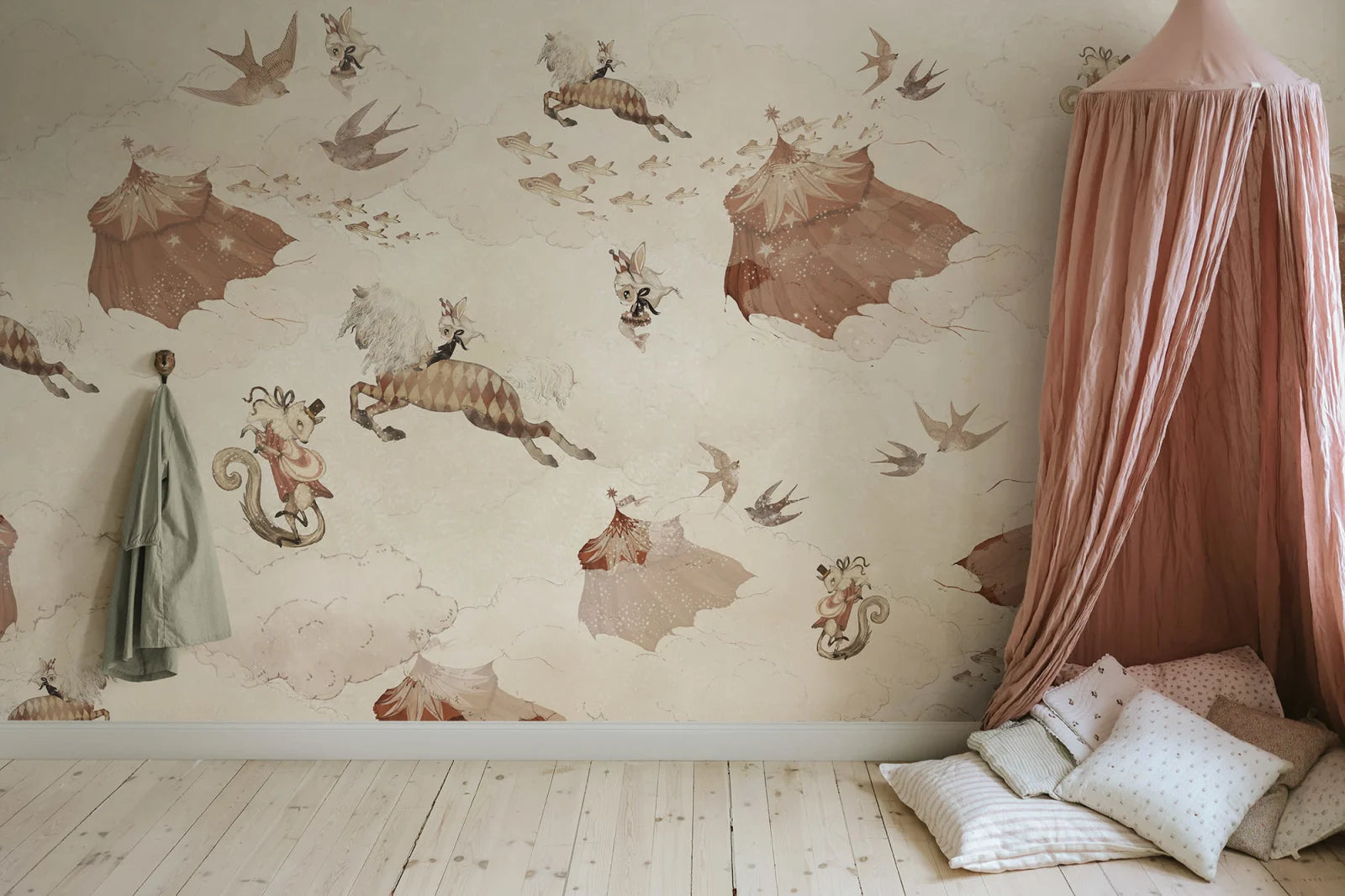
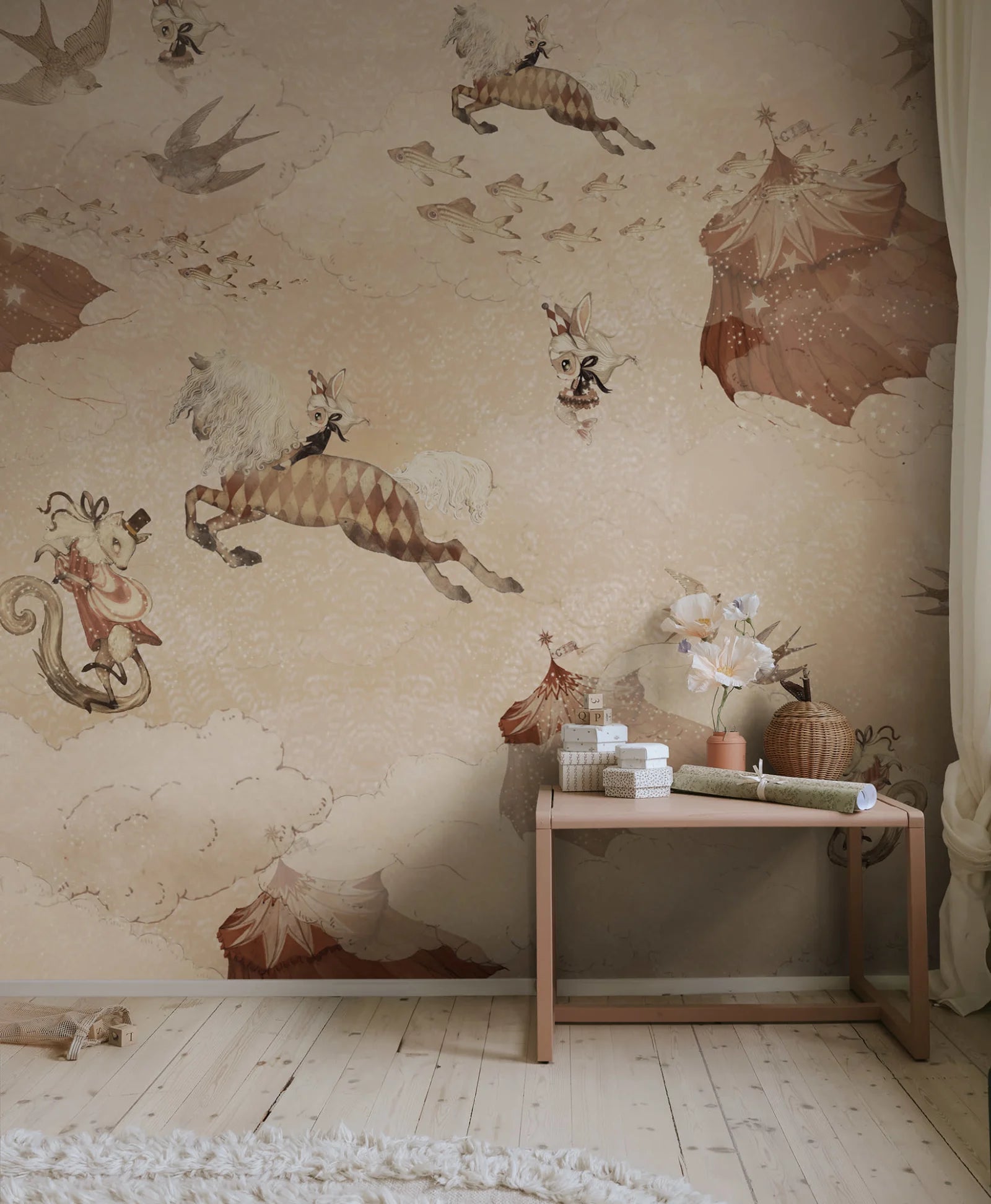
Scenic, panoramic, and repeating: know which one you're buying
The word mural covers three different products. A true panoramic (sometimes called a scenic) is a single continuous image split across numbered drops that hang in strict left-to-right order, like a photograph cut into vertical strips. A repeating mural tiles a larger motif that starts over every few panels, which forgives small measuring errors but can look busy on a long wall. A digital or made-to-measure mural is printed to your exact wall dimensions from one master file, so seams fall wherever the printer decides rather than on a fixed panel grid.
The distinction drives everything downstream. Panoramics are usually sold as a fixed set covering a stated width and height, and you cannot simply order a few extra strips if a wall is wider. Made-to-measure murals bill by the square foot or meter and adapt, but any error in your measurements is printed permanently. Ask which type you are looking at before you fall for the image.
Measure for the image, not just the wall
Standard wallpaper math does not apply to murals. You are matching a picture to a surface, so measure the full width and height of the wall at several points (older walls are rarely square) and record the largest number in each direction. Add a trim allowance at top and bottom, typically two to four inches, because ceilings and baseboards are never perfectly level and you want image to cut, not blank paper.
Think about what the scene loses when furniture and outlets interrupt it. A panoramic landscape reads best where the horizon line sits above a sofa back or headboard rather than behind it. Map where windows, switch plates, and art will land before ordering, and if a made-to-measure file lets you nudge the composition, shift the focal point away from the spots that will be blocked.
Substrate and finish change the room
The same image looks like two different products on two different grounds. Non-woven substrates are the most forgiving to hang because the paste goes on the wall, the material is dimensionally stable, and it strips off dry in full sheets years later. Traditional paper grounds cost less but expand when pasted and demand a booking time, which is where amateur hangs go wrong.
Finish sets the mood and the durability. A matte or eggshell surface hides wall imperfections and reads as fine art, while a subtle metallic or mica ground catches light and suits entryways and powder rooms. In a kitchen or bath, ask whether the print is scrubbable and moisture-tolerant before committing to a hand-finished paper that a splash could ruin.
Quick checklist before you order
- Wall typeConfirm panoramic (fixed panels) vs made-to-measure (printed to your size) first.
- Measure twiceRecord the widest width and tallest height, then add a 2-4 inch trim allowance.
- Focal pointPlan where furniture, outlets, and windows fall so they don't cut the scene's subject.
- SubstrateNon-woven hangs and strips cleaner than a traditional paper ground.
- Order one jobBuy all panels together so batch and color match across the wall.
Frequently asked
Do mural panels have to hang in order?
A panoramic scene does, because the drops are numbered pieces of one image; a repeating mural is more forgiving but should still follow the maker's sequence.
Can I put a mural in a bathroom?
Yes, if the print is on a scrubbable, moisture-tolerant substrate with good ventilation; avoid delicate hand-finished papers in wet zones.
What if my wall is wider than the mural?
Made-to-measure murals scale to any width, but fixed panoramics cover a set size, so measure before you choose a product type.
Read more
- Zuber, and the woodblocks still printing after two centuriesThe oldest surviving scenic-paper house in the world still prints from tens of thousands of hand-carved blocks. What that means for a mural you can commission today.
- How a panoramic scene gets planned to a wallA mural is not a pattern that repeats. It is a single image sized to one specific room, which changes how it is measured, ordered as a numbered panel set, and hung.
- Scenic paper from Reveillon to the panoramic boomThe wall-sized landscape has a documented history running through eighteenth-century Paris. Knowing it clarifies what a scenic mural is actually trying to do.
- Hand-painted versus digitally printed murals: what you are really choosingTwo very different crafts make today's murals. The choice sets cost, lead time, how much you can customize, and how the finished wall reads from a foot away.
- Installing a mural: prep, layout, and why it goes to a paperhangerA numbered panel set is unforgiving. The order of operations, the substrate prep, and the reason mural work belongs to a specialist installer.
- Making an Impression: Statement Murals and the Art of Interior Presence